
Why Small Businesses Are Targeted More Than Enterprises
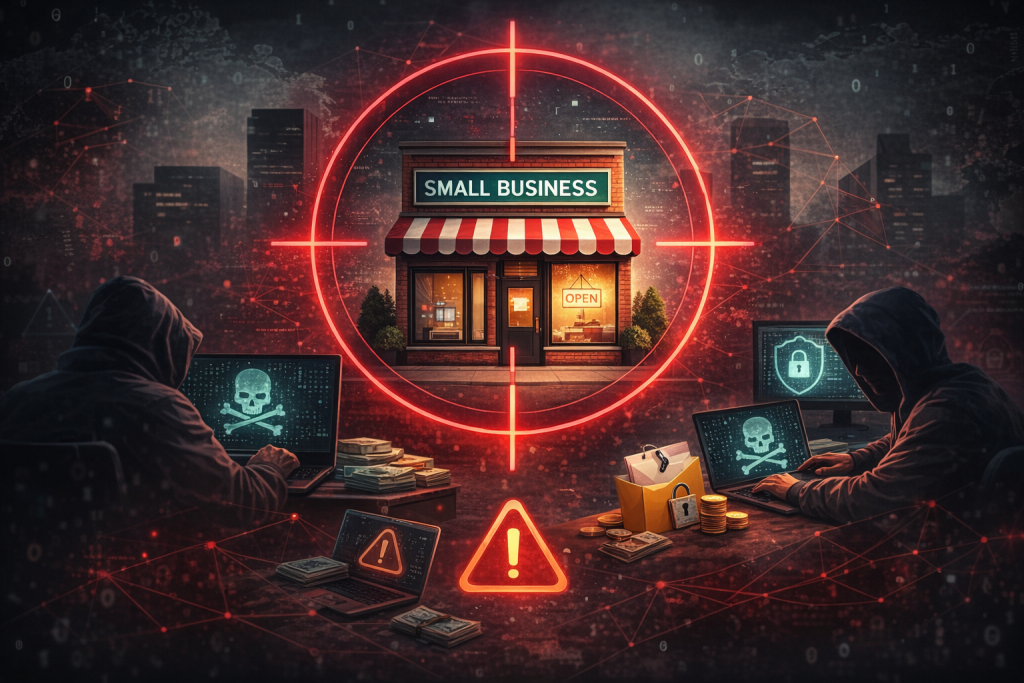
When people hear about cyberattacks, they usually picture massive corporations making the news. Large companies with thousands of employees, huge budgets, and global reach. What most people do not realize is that small businesses are actually targeted far more often.
In fact, if you own or work for a small business, there is a good chance you are a more attractive target than a Fortune 500 company.
Here is why.
The Biggest Myth About Cybercrime
A common belief is, “Why would anyone target us? We are too small to matter.”
Attackers think the opposite.
Cybercriminals are not looking for fame. They are looking for easy access, quick money, and low risk. Small businesses check all three boxes.
Large enterprises invest heavily in cybersecurity. They have dedicated teams, layered defenses, 24 hour monitoring, and strict policies. Small businesses often rely on basic protections, outdated systems, or a single person handling IT part time.
To an attacker, that difference matters more than company size.
Small Businesses Have Valuable Data
Many small business owners underestimate how valuable their data is.
Even a small company may store:
-
Customer names, emails, and phone numbers
-
Payment and billing information
-
Employee records and tax data
-
Login credentials and passwords
-
Access to vendors, partners, or larger organizations
This data can be sold, reused, or leveraged for additional attacks. In many cases, attackers do not stop with one business. They use it as a stepping stone.
Fewer Defenses Make Easier Targets
Large enterprises expect attacks and prepare for them. Small businesses often do not.
Common weaknesses include:
-
Shared passwords
-
Administrator accounts used for daily work
-
No multi factor authentication
-
Outdated software and systems
-
No formal security policies
-
No monitoring or alerting
Attackers use automated tools that scan the internet looking for these exact conditions. When they find them, the attack can happen in minutes.
No human is even involved at first.
Small Businesses Are Less Likely to Detect an Attack
Enterprises have teams watching their systems around the clock. Small businesses usually do not.
This means:
-
Breaches go unnoticed longer
-
Attackers have more time to move around
-
More data is exposed or stolen
-
Damage increases before anyone realizes something is wrong
In many cases, businesses find out weeks or months later, often when customers complain or systems stop working.
Ransomware Hits Small Businesses Harder
Ransomware is one of the most common threats facing small businesses today.
Enterprises may have backups, legal teams, cyber insurance, and recovery plans. Small businesses often do not. When systems go down, operations stop.
Attackers know this.
They understand that a small business may feel forced to pay just to get back to work. Even a relatively small ransom can feel devastating when payroll, invoices, and customer access are on the line.
Supply Chain Attacks Start Small
Another reason small businesses are targeted is access.
If your business works with:
-
Larger companies
-
Government agencies
-
Healthcare providers
-
Financial institutions
You may be an easier way in.
Attackers sometimes compromise a smaller business first, then use that access to reach larger targets. This makes small businesses an essential part of a much bigger picture.
Why This Matters More Than Ever
Regulations and data protection laws are becoming stricter. In states like Massachusetts, businesses are legally required to protect certain types of data.
A breach is no longer just a technical problem. It can lead to:
-
Legal obligations
-
Regulatory fines
-
Loss of trust
-
Reputation damage
-
Business interruption
For many small businesses, one serious cyber incident is enough to shut the doors permanently.
Many of the risks small businesses face can be reduced with thoughtful system design and proper oversight, which is why I focus on practical protections through my IT services for small businesses.
What Small Businesses Can Do Right Now
The good news is that you do not need enterprise level budgets to reduce risk.
A few smart steps can make a huge difference:
-
Use standard user accounts for daily work
-
Lock down administrator access
-
Enable multi factor authentication
-
Keep systems updated
-
Back up data properly and test it
-
Get clear guidance from someone who understands both technology and business
Cybersecurity does not have to be complicated. It just has to be intentional.
Final Thoughts
Small businesses are not targeted because they are unimportant. They are targeted because they are essential, connected, and often under protected.
Understanding this reality is the first step toward protecting your business, your customers, and your livelihood.
Cybersecurity is no longer optional. It is part of running a modern business.
How This Connects to My IT Services
Everything described in this article is based on what I see every day working with small businesses. Cyberattacks are not theoretical. They are happening to real companies that simply did not think they were a target.
On my IT Services page, I explain how I help small businesses reduce risk by locking down administrator access, improving security visibility, and putting practical protections in place that actually work. My focus is not on selling fear, but on building systems that support your business without adding complexity.
If you are unsure whether your current setup is putting you at risk, it may be worth taking a closer look.
Learn more about my IT Services for small businesses
https://natedaniels.net/it-services/